
What Is Portfolio Management?
Portfolio management – or project portfolio managementProject Portfolio ManagementProject portfolio management refers to the centralized management of all projects within a company. (PPM) – describes the structured governance of all projectsProjectA project is a temporary initiative with clearly defined objectives, resources, and a specific outcome. and initiatives within an organization. The goal is to focus on the initiatives that contribute most to the company’s strategy.
At its core, portfolio managementPortfolio ManagementPortfolio management is the strategic management of a set of projects, programs, or investments within a company. is the interaction of four key areas:
- Strategize: The corporate strategyCorporate StrategySynonym for → Strategic PlanningLong-term direction of a company. is translated into clear evaluation criteria.
- Collect: Project ideas and proposals are collected centrally, structured, and made comparable.
- Decide: Prioritization and planning are based on transparent data.
- Execute: Approved initiatives are managed, reviewed regularly, and adjusted as needed.
What Makes Portfolio Management
So Relevant – and So Complex

In practice, many organizations quickly run into limits – regardless of industry or size. Typical challenges include:
- Scattered information: ProjectProjectA project is a temporary initiative with clearly defined objectives, resources, and a specific outcome. data is spread across Excel spreadsheets, whiteboards, presentations, or personal notes. Consolidating this information costs time and energy.
- Unclear responsibilities: Who prepares decisions? Who makes them? Missing roles and governance bodies lead to delays.
- Gut feeling instead of criteria: Decisions are made without clear evaluation standards – resulting in frustration and low acceptance.
- Too many parallel initiatives: Projects are rarely stopped. Teams work on too many things at once and become overloaded.
Strategic portfolio managementStrategic Portfolio ManagementStrategic portfolio management refers to the holistic management of all projects and investments within a company. creates clarity and focus. Decisions are data-driven, priorities are set transparently, and resources are planned realistically.
How Clarity Supports Portfolio Management
Clarity helps organizations implement their portfolio management process in a simple, transparent, and traceable way – without unnecessary complexity.
Creating Transparency – All Information in One Place
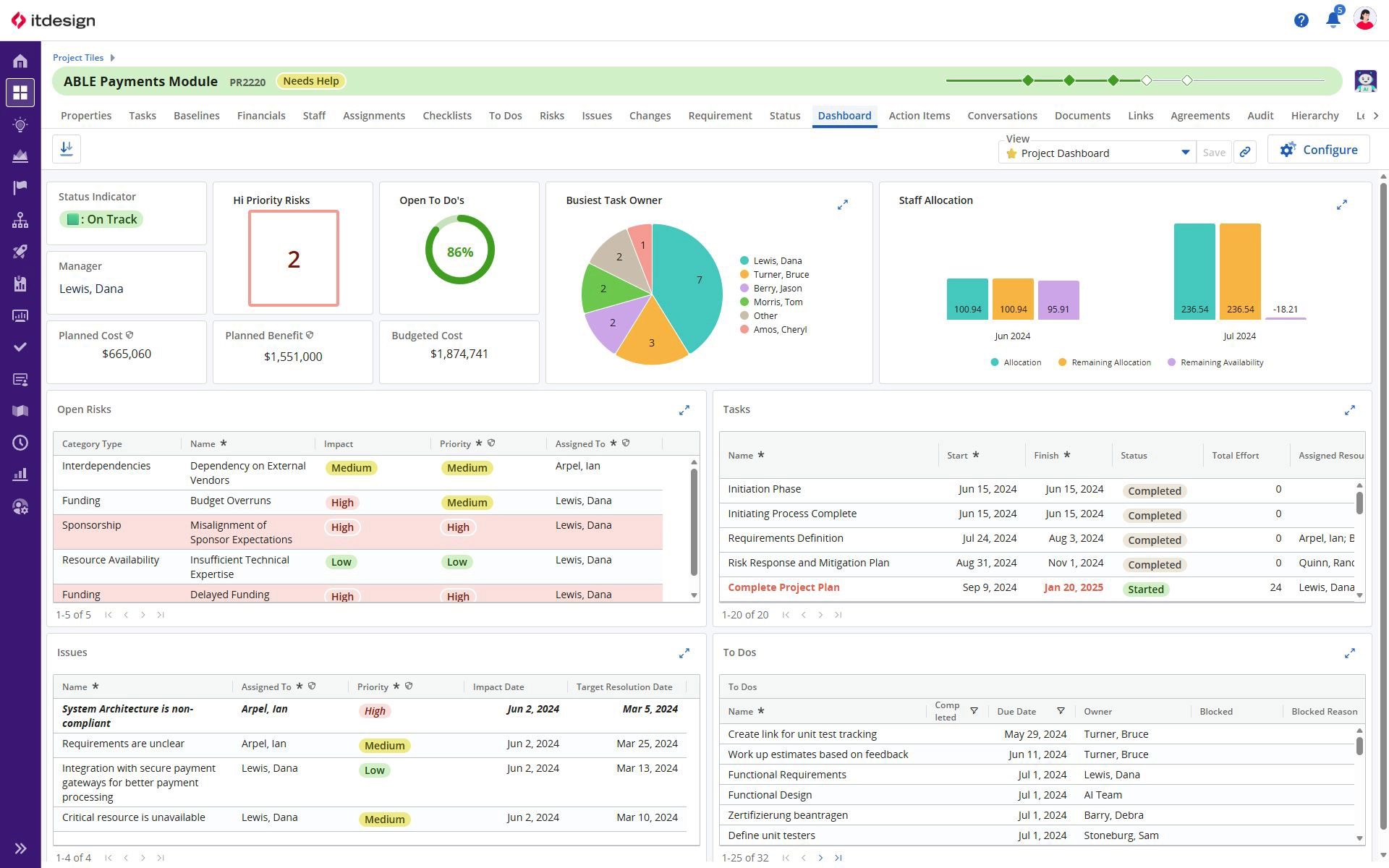
Clarity brings all relevant projectProjectA project is a temporary initiative with clearly defined objectives, resources, and a specific outcome. data into one central system.
Projects are structured, for example by project type, portfolio, department, or cost. This creates a reliable data foundation – also as a basis for deeper analysis or the use of AI.
There is no standard project template. Clarity can be customized to fit the specific needs and structures of an organization.
Among other things, Clarity can capture:
- Task plans
- Roles, people, and skills
- Risks and costs
Clarifying Roles and Securing Decisions
In Clarity, processes are mapped directly within the system.
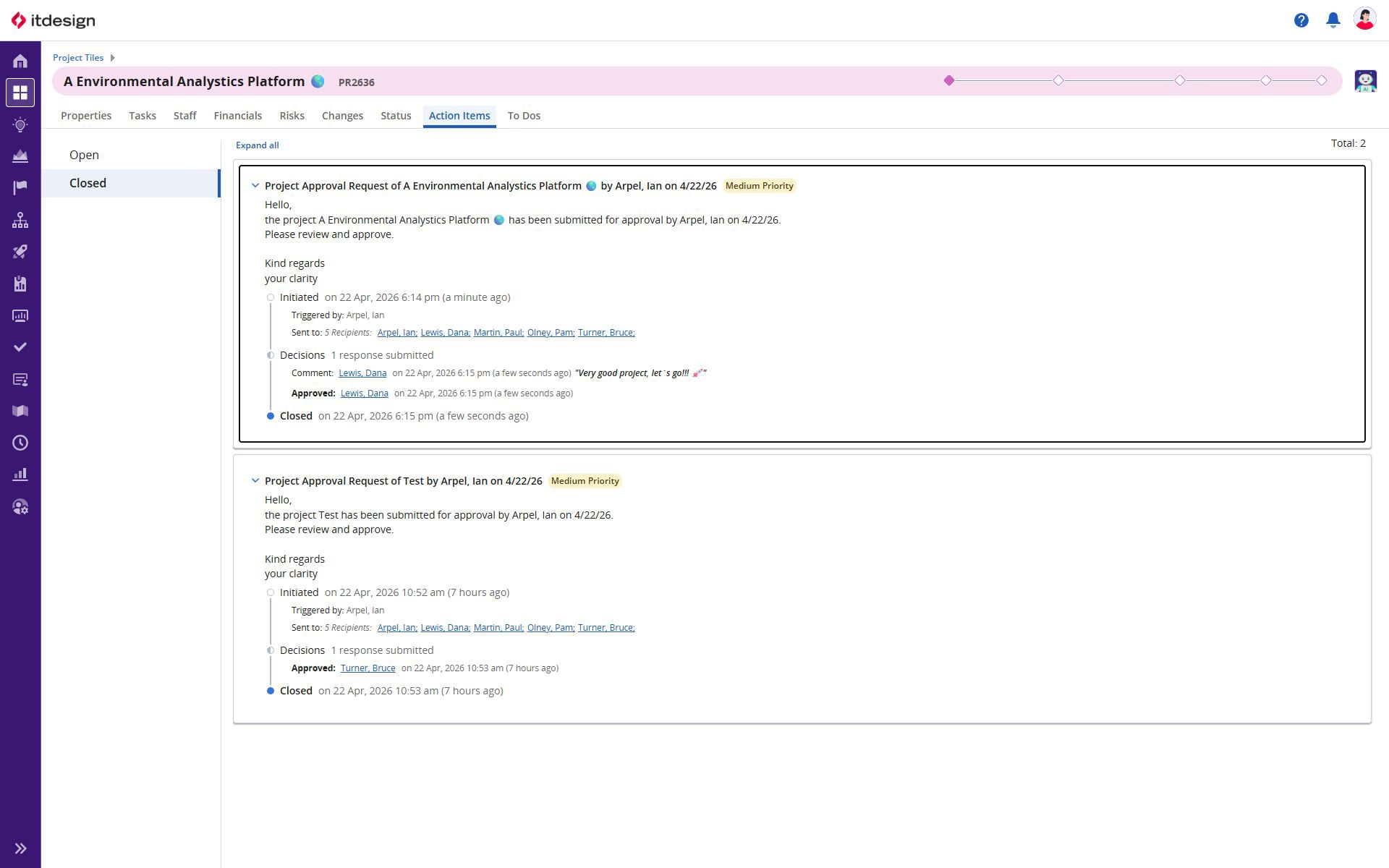
Decision-makers are notified automatically when their approval or evaluation is required. This makes responsibilities clear and decisions traceable.
At the same time, data quality can be actively managed:
- ProjectsProjectA project is a temporary initiative with clearly defined objectives, resources, and a specific outcome. can only be submitted once all required information is available
- New tabs and sections appear depending on the project phase or approval status
Prioritizing, Considering Resources, and Avoiding Overload
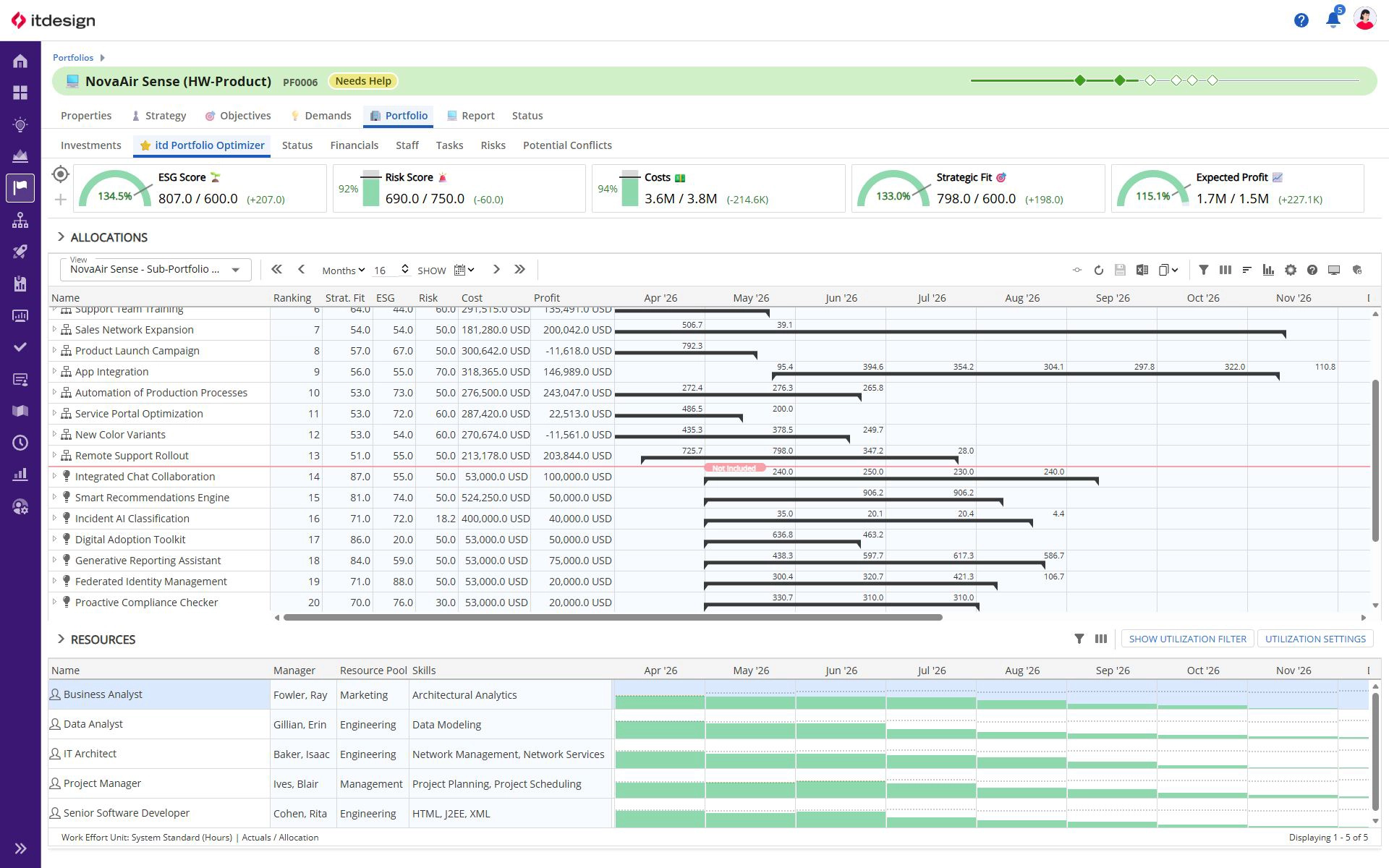
Clarity enables strategic portfolio managementStrategic Portfolio ManagementStrategic portfolio management refers to the holistic management of all projects and investments within a company. based on clear criteria.
During ongoing portfolio operations, continuous adjustments are possible – including concrete indications of when it makes sense to stop projectsProjectA project is a temporary initiative with clearly defined objectives, resources, and a specific outcome..
- Scores and strategic contributions are captured and can be analyzed
- Projects can be prioritized based on strategic value
- Resource availabilityResource AvailabilitySynonym for → AvailabilityAvailable capacity of employees or teams. flows directly into planning
- ScenarioScenarioA scenario is a simulated planning situation within a project portfolio. planning shows when projects can realistically start
Who Benefits Most From Using Clarity for Portfolio Management?

Executive Management
Receives targeted notifications when decisions are required and makes decisions based on relevant KPIs, reliable data, and derived recommendations for action.

Portfolio Managers
Can prioritize projectsProjectA project is a temporary initiative with clearly defined objectives, resources, and a specific outcome. by strategic contribution, plan resources realistically, and use scenarioScenarioA scenario is a simulated planning situation within a project portfolio. planning to create transparency around feasible timelines.

Project Managers
Benefit from transparent priorities and planning that takes available capacityCapacitySynonym for → AvailabilityGeneral term for available work capacity. into account – overload becomes visible and avoidable.
One of the biggest advantages that Clarity has is that it’s extremely flexible and modular, which makes it relatively easy to integrate it with other systems via interfaces.

Clarity is the proverbial jack of all trades among PPM tools. The software is outstanding across all areas, and in some of them it even leads the field. The functionality and flexibility of Clarity were decisive criteria in our selection process.

The development of Clarity at Unternehmensgruppe Theo Müller has been very successful: In the past, with some topics, the question was whether we needed to do this in Clarity. Today, we tend to ask ourselves: "Can we map this in Clarity?".

Thanks to Clarity‘s flexibility in customizing and aligning processes and views, we are able to satisfy the needs of different areas.

How you could describe Clarity: Simplify and satisfied. The huge advantage of working with Clarity as a project manager is that it provides you with everything in one tool. Everything that needs to be done in the area of project management is not only manageable, but also evaluable.

We showed how difficult it was to make costs and revenues transparent and to compare them without Clarity. And, of course, top management wants to know whether we are staying within our budgets, whether we are profitable, and if what we are doing is contributing to this or not. At this point, we quickly recognized the added value of Clarity, and we were also able to convince the management to introduce the new software.

Clarity is now a core system that we use to manage and monitor projects and project portfolios at our company, and it complements our application landscape accordingly. We also use Clarity as a reporting tool at the management level, since it offers a simple and transparent overview of the project landscape and the status of the individual projects.

Experience Clarity in Action
See what strategic portfolio management with Clarity looks like in practice – tailored to your organization and your goals. Discover the features that help you bring focus back into your project portfolio.