

Unclear responsibilities are among the most common reasons projectsProjectA project is a temporary initiative with clearly defined objectives, resources, and a specific outcome. lose momentum. Decisions are delayed, accountability becomes blurred, and project managers end up carrying responsibilities that actually belong elsewhere. The issue rarely lies with the people involved, but rather with the absence of clear guardrails.
This is especially evident in project portfolio managementProject Portfolio ManagementProject portfolio management refers to the centralized management of all projects within a company.: transparency alone is not enough. It makes problems visible, but it does not solve them. Only clear governanceGovernanceGovernance establishes the rules, responsibilities, and decision-making structures that guide an organization. ensures that roles, responsibilities, and decision-making processes are clearly defined and work effectively in day-to-day operations.
- When Accountability Becomes Diffuse, the Entire Portfolio Suffers
- Governance Is the Next Maturity Stage After Transparency
- Clearly Define Roles – Deliberately Transfer Responsibility
- Governance Requires Processes That Work in Everyday Practice
- Clarity as an Enabler of Effective Governance
- The 5 Most Important Takeaways
When Accountability Becomes Diffuse, the Entire Portfolio Suffers
Many organizations are familiar with this situation: projectsProjectA project is a temporary initiative with clearly defined objectives, resources, and a specific outcome. are launched without a clear understanding of who approved them. Decision-makers are involved too late or receive incomplete information. Project managers feel accountable, even though they do not formally have decision-making authority.
The consequences are tangible: lengthy coordination efforts, delays, and uncertainty at every level. Decisions are made outside established processes or are repeatedly revisited. For project portfolio managementProject Portfolio ManagementProject portfolio management refers to the centralized management of all projects within a company., this ultimately means one thing: a lack of effective control.
Governance Is the Next Maturity Stage After Transparency
The first step toward professional project portfolio managementProject Portfolio ManagementProject portfolio management refers to the centralized management of all projects within a company. is usually creating transparency: Which projectsProjectA project is a temporary initiative with clearly defined objectives, resources, and a specific outcome. are underway? Which resources are committed? What is the current status? This visibility is important, but it is only the foundation.
GovernanceGovernanceGovernance establishes the rules, responsibilities, and decision-making structures that guide an organization. builds on that foundation. It answers the critical questions: Who is responsible for what? Who is authorized to make decisions, and when? And based on what information?
Well-designed governance is not additional bureaucracy. It provides direction, accelerates decision-making, and reduces the burden on both project teams and leadership.
Clearly Define Roles – Deliberately Transfer Responsibility
A key element of effective governanceGovernanceGovernance establishes the rules, responsibilities, and decision-making structures that guide an organization. is the clear definition of roles and responsibilities throughout the projectProjectA project is a temporary initiative with clearly defined objectives, resources, and a specific outcome. lifecycle. Instead of relying on implicit expectations, organizations need explicit accountability.
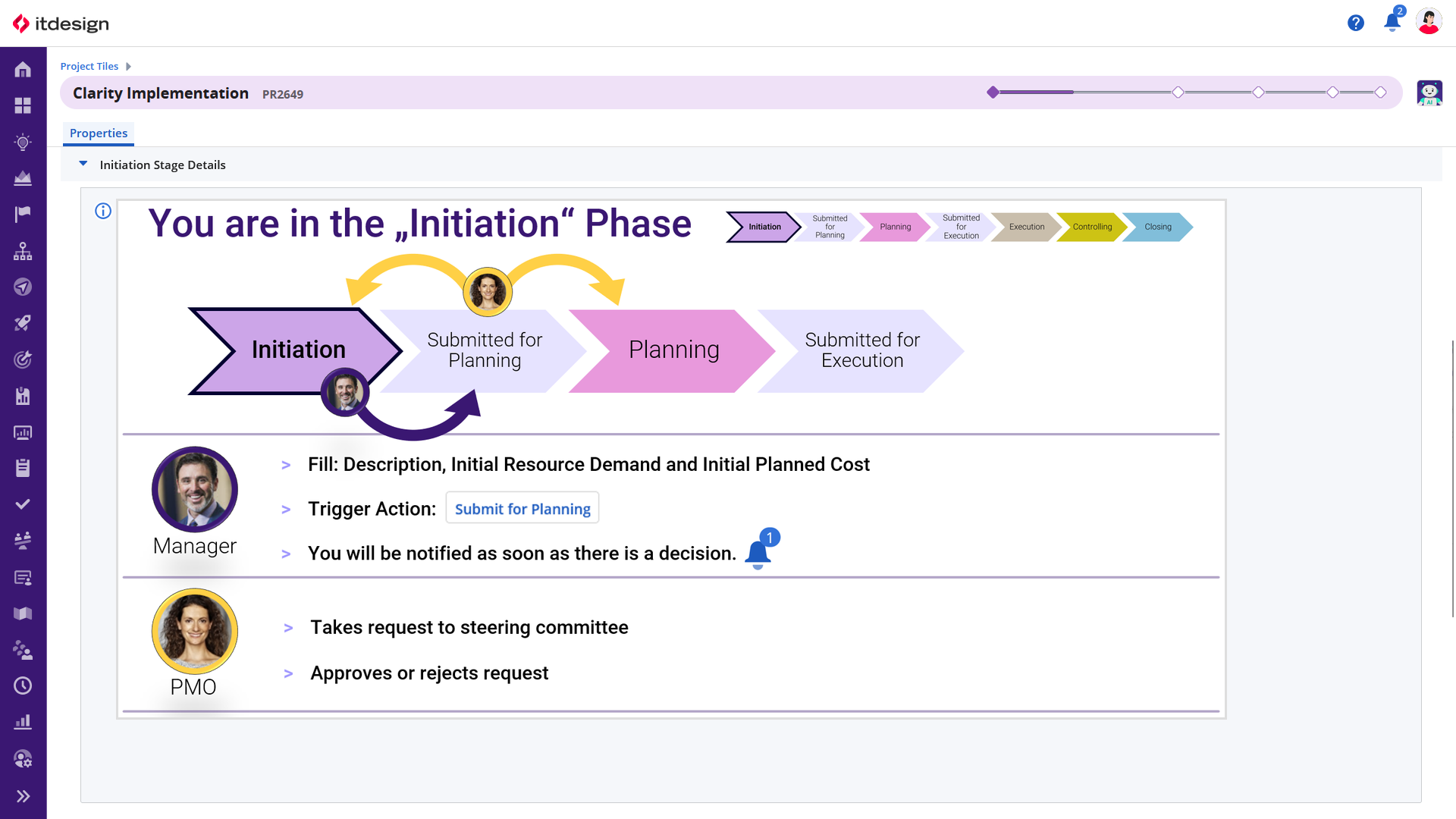
A practical example: project managers are responsible for project content and data quality. They prepare projects and submit them for approval. The formal decision, however, rests with clearly designated decision-makers or governance bodies. Once a project is submitted, responsibility is intentionally transferred.
This clarity creates confidence for everyone involved and particularly relieves project managers of unnecessary pressure.
Governance Requires Processes That Work in Everyday Practice
Roles alone are not enough. GovernanceGovernanceGovernance establishes the rules, responsibilities, and decision-making structures that guide an organization. becomes effective only when it is supported by clear, well-established processes. This is exactly where many initiatives fail: processes are too complex, too theoretical, or not consistently embedded in daily operations.
The key is to design governance in a way that supports day-to-day work rather than obstructing it. Processes must be understandable, binding, and transparent. Most importantly, they must be applied where decisions are actually made.

Clarity as an Enabler of Effective Governance
Clarity helps organizations embed governanceGovernanceGovernance establishes the rules, responsibilities, and decision-making structures that guide an organization. at the system level. It begins with data quality: decisions can only be made confidently when relevant information is complete and consistent.
In Clarity, required fields, dependencies, and logical validations can be configured so that projectsProjectA project is a temporary initiative with clearly defined objectives, resources, and a specific outcome. can only be submitted for approval when all necessary information has been provided. As a result, data quality is built into the process rather than relying on manual reminders.
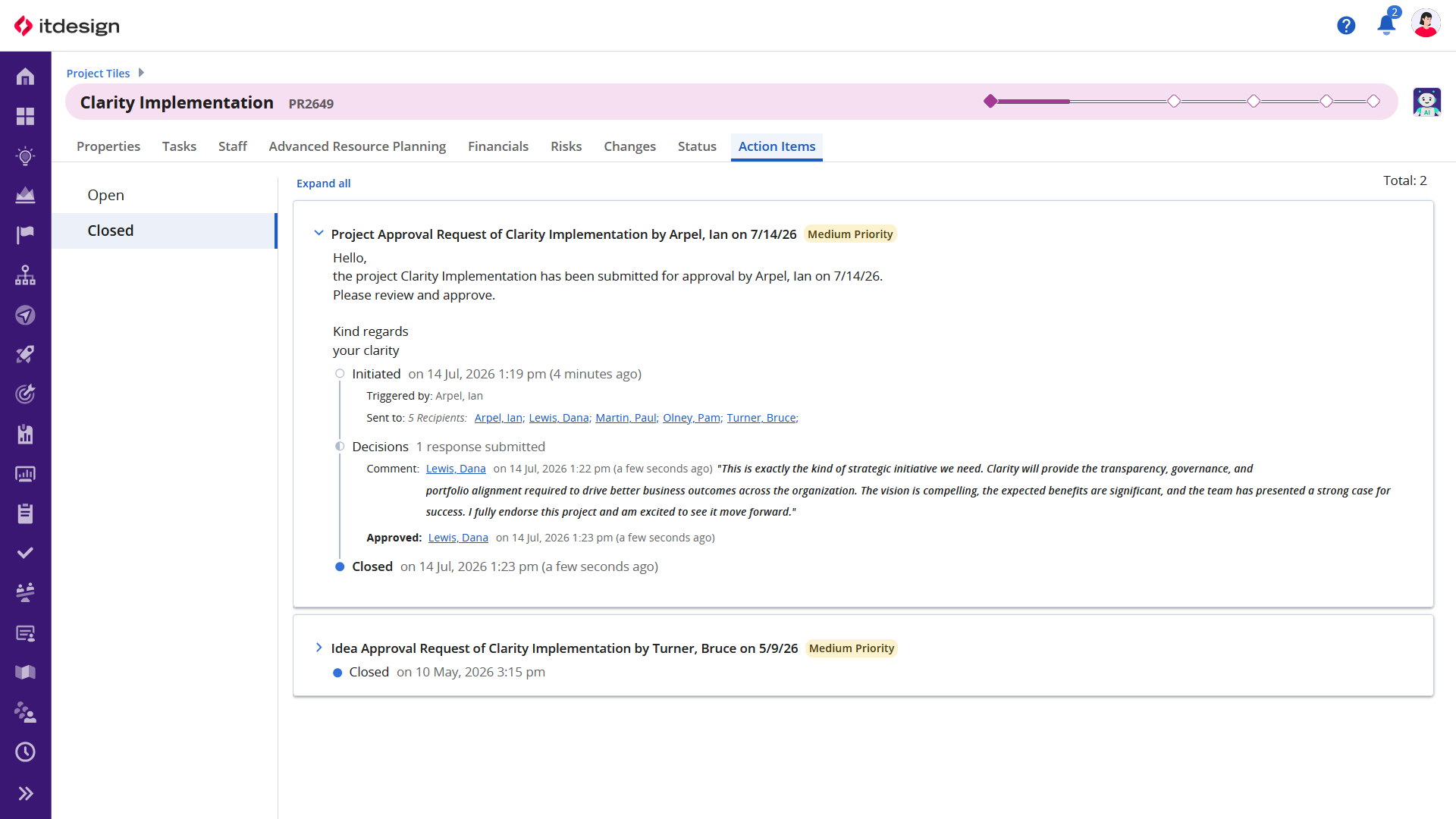
At the same time, automated workflows ensure clear handoffs of responsibility. When a project is submitted, an action itemAction ItemAn Action Item is a clearly defined task assigned to an individual or team for follow-up execution. is triggered to notify the appropriate decision-makers. Responsibility shifts transparently and traceably – supported directly by the system.
Making Decisions in a Structured Way
Whether decisions are made by an individual or a committee, Clarity supports different approval models. Decision-makers receive all relevant contextual information, can add comments, and document approvals or rejections directly in the system. This creates a clear, traceable decision-making process – without media disruptions and without additional coordination loops.
Phase-Based Governance Provides Direction
GovernanceGovernanceGovernance establishes the rules, responsibilities, and decision-making structures that guide an organization. in Clarity aligns with the projectProjectA project is a temporary initiative with clearly defined objectives, resources, and a specific outcome. lifecycle. Depending on the project phase, specific content, functions, and requirements are displayed or hidden. What is relevant during initiation differs significantly from what is needed during planning or execution. This phase-based approach reduces complexity and provides clear guidance for everyone involved.
Creating Clarity Without Adding Bureaucracy
For project portfolio managementProject Portfolio ManagementProject portfolio management refers to the centralized management of all projects within a company. leaders, this means they can establish clear accountability without resorting to micromanagement. They can implement governanceGovernanceGovernance establishes the rules, responsibilities, and decision-making structures that guide an organization. that is embraced because it makes daily work easier. And they gain a reliable foundation for discussions with decision-makers.

The 5 Most Important Takeaways
Transparency is important. Governance makes it effective.
Transparency shows where problems exist. Governance defines who acts and who decides. Only the combination of both makes project portfolio management manageable and controllable.
Clear roles reduce the burden on project teams and leaders.
When responsibilities are clearly defined, project managers are not forced to “own” decisions they are not authorized to make, and decision-makers know exactly when their involvement is required.
Governance only works when it supports everyday work.
Role models on paper are not enough. Clearly defined, well-established processes are what make governance accepted rather than bypassed.
Good decisions require good data.
Governance becomes effective when data quality is ensured through the system. Required fields, business logic, and workflows create a reliable basis for decisions without creating additional work.
Clarity embeds governance where decisions are made.
With clear workflows, responsibility handoffs, and phase-based governance, Clarity consistently supports governance throughout the entire project lifecycle.
Implement Governance Effectively – With itdesign and Clarity
Governance is not purely a technology issue. It emerges from the interaction of organizational structures, processes, and technology. As an experienced Clarity partner, itdesign helps organizations design and implement governance models tailored to their specific needs and sustain them over time. Let’s discuss what governance could look like within your project portfolio management environment.

Read Next