

Many organizations invest significant time and energy in building their projectProjectA project is a temporary initiative with clearly defined objectives, resources, and a specific outcome. portfolios. Projects are prioritized, evaluated, discussed, and approved. Yet once the portfolio is established, the real challenge begins: managing it consistently – and, when necessary, ending projects. This is precisely where solid portfolio managementPortfolio ManagementPortfolio management is the strategic management of a set of projects, programs, or investments within a company. is separated from strategic excellence.
Stopping projects is uncomfortable. It requires courage, clarity, and often a willingness to overcome emotional barriers. At the same time, it is one of the most effective ways to regain focus, free up resources, and increase strategic impact. It is no coincidence that terminating projects is considered one of the highest disciplines of strategic portfolio managementStrategic Portfolio ManagementStrategic portfolio management refers to the holistic management of all projects and investments within a company..
- Portfolio Management Does Not End with Prioritization
- Why Projects Are Rarely Stopped – Even When They Are Underperforming
- The Dead Horse Theory: An Uncomfortable but Honest Perspective
- How Tools Support Better Decision-Making
- Conclusion: Stopping Projects Is a Sign of Maturity
- The 5 Most Important Takeaways
Portfolio Management Does Not End with Prioritization
In practice, we repeatedly observe a similar and proven pattern: organizations introduce portfolio managementPortfolio ManagementPortfolio management is the strategic management of a set of projects, programs, or investments within a company. step by step – usually in three phases.
- The first objective is to create transparency. Which projectsProjectA project is a temporary initiative with clearly defined objectives, resources, and a specific outcome. are currently running? What is their status? Which resources are committed? This visibility alone often leads to important insights.
- The next phase focuses on governanceGovernanceGovernance establishes the rules, responsibilities, and decision-making structures that guide an organization.: establishing clear roles, decision-making processes, and shared evaluation criteria. Portfolio management becomes a structured discipline rather than a situational exercise.
- The third phase is data-driven decision-making. Projects are no longer only initiated – they are actively managed, reprioritized, adjusted, or discontinued.
By the latest stage, one thing becomes clear: a portfolio is not a static construct. It is a living system that must be reviewed and adjusted regularly. And this is exactly where many organizations struggle.
Why Projects Are Rarely Stopped – Even When They Are Underperforming
ProjectsProjectA project is a temporary initiative with clearly defined objectives, resources, and a specific outcome. not going according to plan is perfectly normal. Markets change, strategic priorities shift, and business conditions evolve. Yet many projects continue long after they should. The reasons are rarely technical or operational. More often, emotional and organizational factors are involved:
- Teams have invested months of effort and commitment.
- Decision-makers want to justify earlier choices.
- Project cancellations are perceived as personal failures.
- There is a lack of clear, objective criteria for termination.
The key question is therefore not simply, “Is this project performing well?” but rather: “How do we collectively recognize when it no longer makes sense to continue?”

The Dead Horse Theory: An Uncomfortable but Honest Perspective
A well-known concept illustrates this dilemma perfectly: the Dead Horse TheoryDead Horse TheoryDead Horse Theory illustrates the tendency to continue investing in initiatives that clearly no longer deliver value.. In simple terms, it states that when you realize you are riding a dead horse, you should dismount.
Applied to projectProjectA project is a temporary initiative with clearly defined objectives, resources, and a specific outcome. portfolios, this means resources continue to be consumed even though the expected benefits no longer justify the effort involved. In many cases, everyone involved already recognizes that the project is unlikely to achieve its objectives – yet taking decisive action remains difficult.
The Dead Horse Theory is therefore less of a management methodology and more of a mirror. It reveals how strongly habits, optimism, and emotional attachment influence decisions, and why clear governanceGovernanceGovernance establishes the rules, responsibilities, and decision-making structures that guide an organization. rules are essential.
Practical Approach #1: Consistently Terminate Paused Projects
One highly effective approach from real-world practice is radical – and that is exactly why it works.
One organization decided to terminate all projectsProjectA project is a temporary initiative with clearly defined objectives, resources, and a specific outcome. that had been paused for nine months.
The logic behind this decision is straightforward: if a project has not actively progressed for that long, there are reasons for it. Instead of carrying these projects indefinitely, they are systematically closed.
A restart remains possible – but only if the initiative goes through the complete demand managementDemand ManagementDemand management refers to the structured capture, evaluation, and prioritization of new project requests within an organization. process again. This ensures that the project is reassessed against current strategic objectives and evaluation criteria.
The result is a significantly leaner portfolio, greater focus, and fewer “zombie projects” quietly consuming resources.
Practical Approach #2: Clear Recommendations Instead of Gut Feelings
A second approach relies on objective criteria and transparent recommendations.
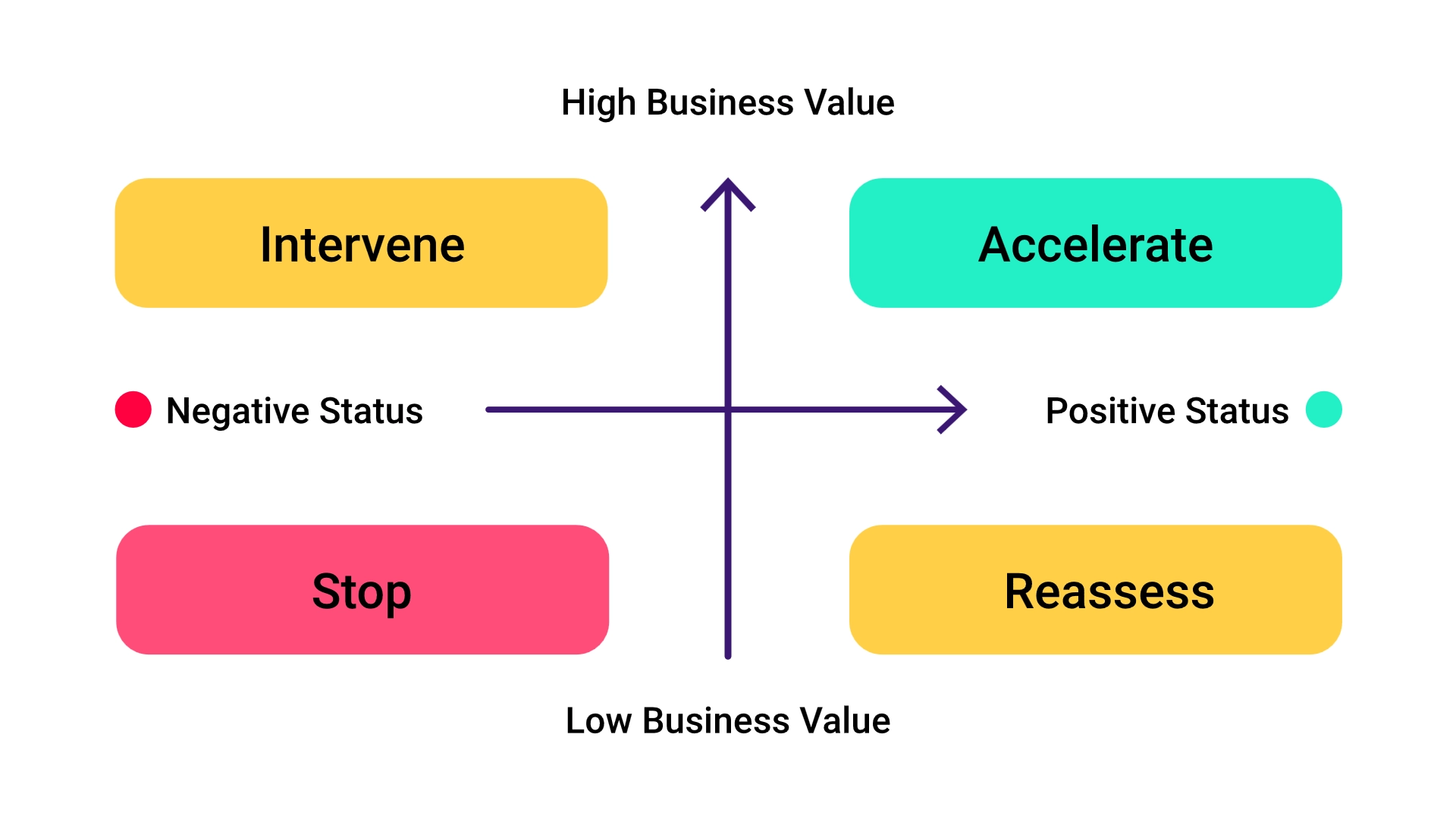
It is based on two dimensions that already exist in many organizations:
- Business Value – the projectProjectA project is a temporary initiative with clearly defined objectives, resources, and a specific outcome.’s contribution to achieving strategic objectives
- Project Status – how well the project is currently performing
Combining these two factors enables clear courses of action:
- High Business Value and Good Project Status: These projects should be accelerated and strengthened within the portfolio.
- High Business Value but Poor Project Status: Active intervention is required. What does the project need to get back on track?
- Low Business Value but Good Project Status: These projects should be reviewed regularly. Strategic priorities evolve, and the relevance of ongoing projects can change with them.
- Low Business Value and Poor Project Status: In this case, the decision is straightforward – the project should be terminated.
The key advantage of this approach is its objectivity. Decisions become transparent, comparable, and less personal, which also increases acceptance among stakeholders.
How Tools Support Better Decision-Making
When it comes to projectProjectA project is a temporary initiative with clearly defined objectives, resources, and a specific outcome. termination, transparency is essential. Comprehensive portfolio managementPortfolio ManagementPortfolio management is the strategic management of a set of projects, programs, or investments within a company. solutions such as Clarity help organizations consolidate relevant information in a structured manner.
Typical elements include:
- Status indicators from recurring project status reports
- Metrics reflecting a project’s strategic fitStrategic FitStrategic Fit evaluates how closely an initiative supports an organization's strategic objectives.
- Standardized evaluation frameworks across the entire portfolio
These insights can be used to generate specific recommendations – such as identifying projects that should be critically reviewed or potentially discontinued.
One point remains important: tools do not make decisions. However, they provide the foundation for making objective, data-driven, and fair decisions, while reducing the burden on everyone involved.
Conclusion: Stopping Projects Is a Sign of Maturity
A successful projectProjectA project is a temporary initiative with clearly defined objectives, resources, and a specific outcome. portfolio is not defined by the number of projects that have been launched. Rather, it is defined by consistently investing in the right initiatives and discontinuing those that no longer serve a strategic purpose.
Stopping a project does not mean admitting failure. It means taking responsibility for resources, objectives, and business outcomes. This is precisely what makes it one of the highest disciplines of strategic portfolio managementStrategic Portfolio ManagementStrategic portfolio management refers to the holistic management of all projects and investments within a company..
Organizations willing to dismount regularly when the horse can no longer carry them create room for what truly matters.

The 5 Most Important Takeaways
Stopping projects is not failure – it is a sign of strategic maturity.
A well-managed portfolio is not characterized by numerous project launches, but by the willingness to discontinue initiatives that are no longer relevant.
Portfolio management is a continuous decision-making process.
Transparency and prioritization are important, but the real value comes from regularly reassessing and actively managing the portfolio.
Emotions make rational project decisions more difficult.
Time invested, personal commitment, and ownership can make project termination challenging. Objective criteria help keep decisions fact-based.
Clear rules and recommendations increase acceptance.
Combining Business Value and Project Status creates transparent and fair decision-making – even when a project must be stopped.
Tools do not replace decisions, but they support them effectively.
Solutions such as Clarity provide transparency and comparability, creating a reliable foundation for decision-makers.
Would You Like to Manage Your Project Portfolio More Effectively?
With Clarity and the methodological expertise of itdesign, you can create transparency, objective decision-making foundations, and clear governance structures for your portfolio management.
Talk to us about how you can not only prioritize projects, but also confidently bring them to a close.

Read Next