

There are plenty of projectsProjectA project is a temporary initiative with clearly defined objectives, resources, and a specific outcome. in your organization. What is often missing is a clear overview. Project information is scattered across Excel spreadsheets, presentations, emails, and various tools. Each team uses its own templates, collects different information, and follows its own filing structure. The result: Projects are difficult to compare, decisions take longer, and they are often based on incomplete data.
This is exactly where effective project portfolio managementProject Portfolio ManagementProject portfolio management refers to the centralized management of all projects within a company. comes in. And this is exactly where one thing becomes clear: transparency is the first critical step.
- The Challenge: Scattered Information Across the Project Portfolio
- Why Transparency Is the Logical Starting Point for Project Portfolio Management
- Standards Create Structure Without Slowing Down the Organization
- A Central System as the Foundation for Real Transparency
- Transparency in Practice: Building It Step by Step With Clarity
- Conclusion: Transparency Is Not an End in Itself
- The Five Most Important Takeaways
The Challenge: Scattered Information Across the Project Portfolio
In practice, we encounter the same situation time and again: A projectProjectA project is a temporary initiative with clearly defined objectives, resources, and a specific outcome. is launched, but how it is documented depends heavily on the individual team. Some teams record only a project title, while others use extensive templates. Information about costs, timelines, responsibilities, and risks may be available in great detail – or not at all.
For the project portfolio, this means:
- Lack of comparability between projects
- No consolidated view of costs, resources, and risks
- High coordination effort across departments
- Limited decision-making capability at the management level
The moment priorities need to be set, budgets allocated, or strategic decisions made, this lack of transparency becomes a real challenge.
Why Transparency Is the Logical Starting Point for Project Portfolio Management
Many organizations immediately associate project portfolio managementProject Portfolio ManagementProject portfolio management refers to the centralized management of all projects within a company. with prioritization, governanceGovernanceGovernance establishes the rules, responsibilities, and decision-making structures that guide an organization., or strategic steering. In reality, however, one thing becomes clear: Before decisions can be made, a reliable foundation is needed. That foundation is transparency.
Transparency means:
- ProjectsProjectA project is a temporary initiative with clearly defined objectives, resources, and a specific outcome. are captured consistently
- All relevant project information is available in one place
- Data is visible and analyzable for the appropriate stakeholders
That is why, when introducing project portfolio managementPortfolio ManagementPortfolio management is the strategic management of a set of projects, programs, or investments within a company., we almost always start with the same question: What information do we need to compare and manage our projects effectively?
Standards Create Structure Without Slowing Down the Organization
The key to greater transparency lies in clear, practical standards. This is not about documenting projectsProjectA project is a temporary initiative with clearly defined objectives, resources, and a specific outcome. down to the smallest detail or burdening the organization with bureaucracy.
Successful project portfolio managementProject Portfolio ManagementProject portfolio management refers to the centralized management of all projects within a company. starts with the lowest common denominator – the information that is relevant across all projects and allows them to be organized within a common structure. This standard creates comparability and can always be expanded later.
Which project attributes make sense depends on the organization. Common examples include:
- AssignmentAssignmentAssignment describes the organizational or structural allocation of resources, tasks or projects. to a portfolio or program
- Business unit or organizational entity
- Timeline, including start and end dates
- An initial estimate of costs and resource requirements
- Responsible stakeholders and project owners
The important thing is that these standards are individual. Every organization operates differently – and that should be reflected in its project structure.
A Central System as the Foundation for Real Transparency
Standards deliver their full value only when they are implemented within a central system. As long as projectProjectA project is a temporary initiative with clearly defined objectives, resources, and a specific outcome. information is spread across different tools and files, transparency remains fragmented.
A centralized project portfolio managementProject Portfolio ManagementProject portfolio management refers to the centralized management of all projects within a company. solution such as Clarity provides:
- A consistent data foundation
- Clear structures across all projects
- A reliable single source of truthSingle Source of TruthA Single Source of Truth provides one authoritative and trusted source for business data and information.
Project information no longer has to be gathered manually. Instead, it is available consistently and up to date for business teams, project managers, and leadership alike.
Transparency in Practice: Building It Step by Step With Clarity
Start Small and Expand Purposefully
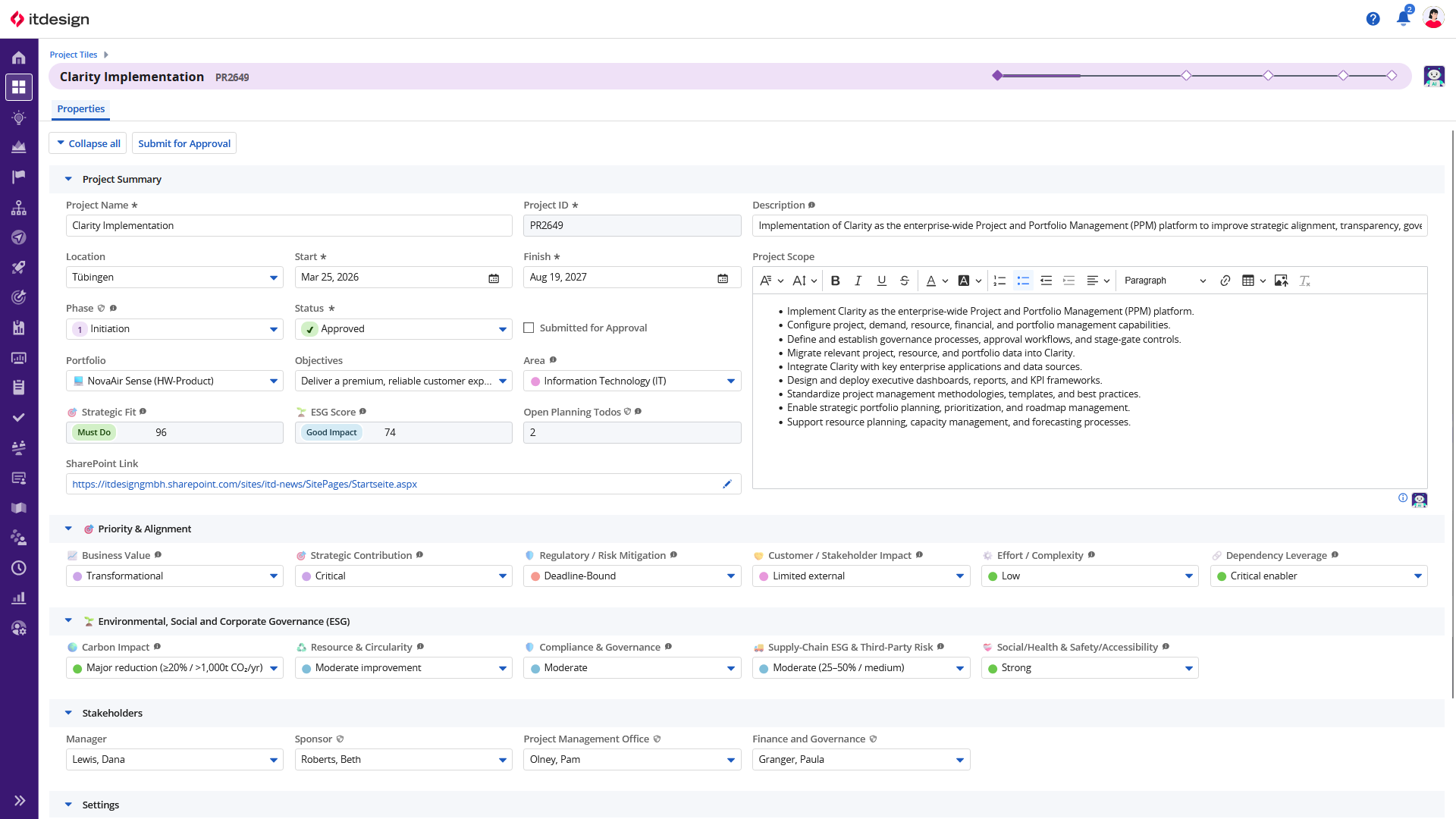
Many organizations deliberately start with a lean setup in Clarity. During the initial phase, the goal is to capture projectsProjectA project is a temporary initiative with clearly defined objectives, resources, and a specific outcome. in a structured way and establish a shared view – not to achieve maximum detail.
As the organization’s maturity grows, additional information can be added, such as:
- More detailed cost and financial information
- Resource and role planning
- Project-specific attributes by project type
- Standardized risks and assessments
Clarity grows with your requirements – not the other way around.
From Project Visibility to Portfolio Governance
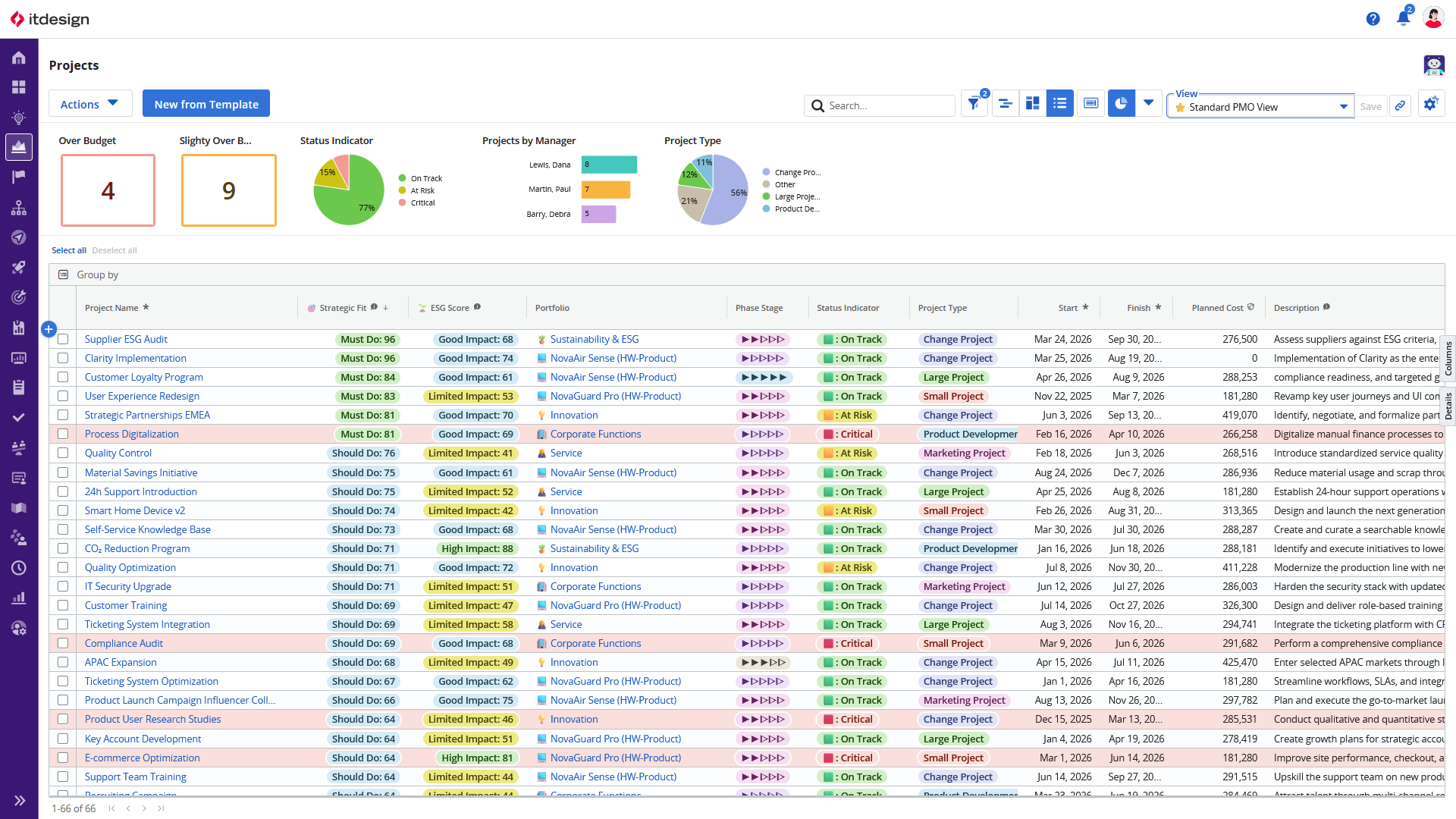
Once projectsProjectA project is a temporary initiative with clearly defined objectives, resources, and a specific outcome. are captured consistently, a major advantage emerges: visibility.
All projects can be displayed in flexible lists and views tailored to different roles and decision-making situations.
In practice, these project lists become a key management tool:
- For recurring status meetings
- For steering committees and governanceGovernanceGovernance establishes the rules, responsibilities, and decision-making structures that guide an organization. boards
- For informed portfolio decisions
Decisions are no longer made based on individual presentations. Instead, they are based on a shared and up-to-date data foundation.
The Value of Transparency: Better Decisions at the Portfolio Level
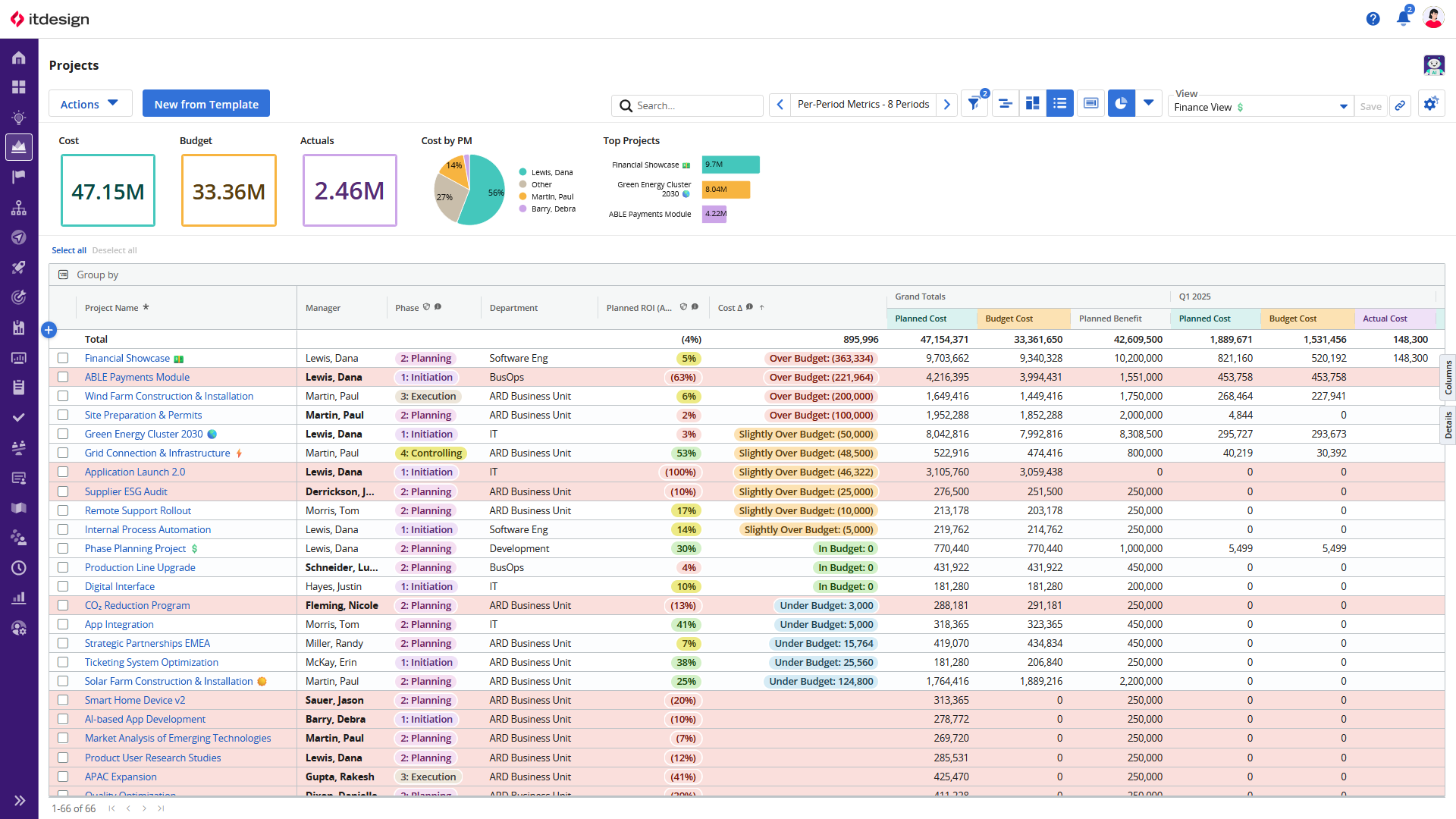
A standardized projectProjectA project is a temporary initiative with clearly defined objectives, resources, and a specific outcome. structure enables analyses that were previously difficult or only possible with significant effort:
- Costs can be aggregated and analyzed by portfolio
- Timeline distributions become visible
- Resources and capacitiesCapacitiesSynonym for → AvailabilityGeneral term for available work capacity. can be tracked more effectively
- Risks become visible not only at the project level but also across the portfolio
This creates a new level of decision-making quality: fact-based, transparent, and easy to understand.
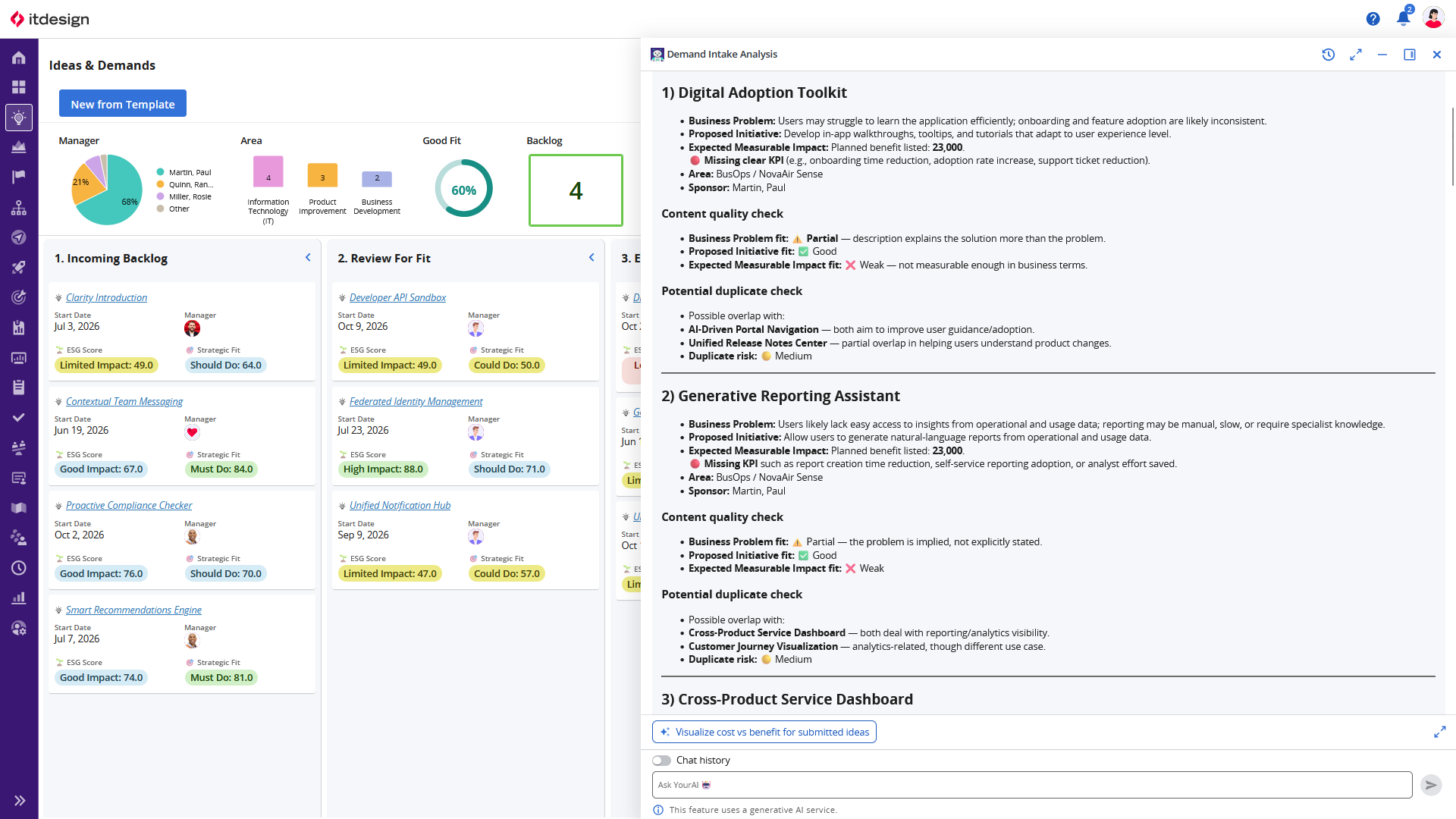
Structured Data as the Foundation for Analytics and AI
Another advantage of structured projectProjectA project is a temporary initiative with clearly defined objectives, resources, and a specific outcome. information becomes apparent when considering analytics and AI. Intelligent analyses require a clean and consistent data foundation.
Consistently documented projects enable:
- Automated analyses
- The identification of patterns and relationships
- Reliable forecasts and scenarioScenarioA scenario is a simulated planning situation within a project portfolio. planning
Transparency is therefore not only a prerequisite for effective project portfolio managementProject Portfolio ManagementProject portfolio management refers to the centralized management of all projects within a company. but also for data-driven decision-making in the future.
Conclusion: Transparency Is Not an End in Itself
Scattered information is one of the biggest challenges in project portfolio managementProject Portfolio ManagementProject portfolio management refers to the centralized management of all projects within a company.. The solution is not greater complexity but greater clarity: consistent standards, a central system, and a gradual, structured approach.
With Clarity, you can create exactly this level of transparency – and establish the foundation for a projectProjectA project is a temporary initiative with clearly defined objectives, resources, and a specific outcome. portfolio that is understandable, comparable, and manageable.

The Five Most Important Takeaways
Transparency Is the Starting Point for Effective Project Portfolio Management
Before prioritization, governance, or decision-making can happen, you need a clear and consistent view of all projects.
Scattered Information Prevents Informed Decisions
Different documentation methods and disconnected solutions make projects difficult to compare and complicate portfolio management.
Consistent Standards Create Structure Without Unnecessary Complexity
The lowest common denominator is sufficient to capture projects in a structured way and generate meaningful insights.
A Central System Is the Foundation for Real Transparency
Only when all project data is brought together in one place can a reliable single source of truth emerge.
Structured Project Data Is the Basis for Better Decisions – Today and Tomorrow
Transparency enables better portfolio decisions and lays the groundwork for advanced analytics and AI-driven insights.
Your Next Step
Would you like to bring transparency to your project portfolio and tailor Clarity to your organization's specific needs? We support you every step of the way – from establishing the initial structure and implementing the solution to continuously evolving your project portfolio management practices. Let's discuss how Clarity can help you achieve your goals.

Read Next