
Process of the Clarity Introduction
Getting to Know the Tool and Partner
In individual live demos, you receive a quick and realistic insight into Clarity. If needed, we deepen specific topics in focused sessions.
Preparing and Testing
In the scoping workshop, we jointly define the project scope and prioritize requirements. In the proof of concept, you test your central use cases as an MVP – providing a well-informed basis for your decision.
Implementing
Implementation takes place iteratively in clearly structured sprints with a focus on standard functionalities. After each sprint, we review the results together to ensure full transparency.
Further Development
Even after go-live, we support you flexibly – continuously or as needed. This ensures that Clarity grows along with your requirements and delivers long-term value.
Getting to Know Clarity and itdesign in Live Demos
We start with a short introductory meeting and a tailored web demo of Clarity. This gives you a quick and realistic impression of how well the solution meets your requirements. If needed, we deepen specific topics in focused deep-dive sessions – efficient, targeted, and non-binding.
- Tailored introduction instead of a standard demo
- Early clarification of core functional and technical requirements
- Right stakeholders involved from the beginning
- Realistic assessment of value and fit
Preparation in the Scoping Workshop
In the scoping workshop, we create the foundation for your implementation projectProjectA project is a temporary initiative with clearly defined objectives, resources, and a specific outcome.: we cluster and prioritize requirements, clarify open questions, and jointly define what should be implemented in the first step. The result is a clear and comprehensible project framework that provides orientation for both sides.
- Clearly defined project scope
- Prioritized requirements as a decision-making basis
- Realistic effort estimation
- Clean foundation for further planning


Testing and Deciding in the Proof of Concept
Together, we build an MVP – a testable and tangible representation of your central use cases in Clarity. You experience and test the tool under real conditions without investing in licenses beforehand. The proof of concept provides maximum decision-making confidence and already forms the basis for the later implementation. Of course, we support you during the test phase and share our best practices.
- Testing with your own processes and use cases
- Well-founded decision-making without license costs
- Early assessment of feasibility and value
- Results can be directly used for implementation

The most important reason behind running a PoC was that it allowed us to put the software and the service provider to the test in advance so that we could answer the important questions that we had at the time. For us, the Proof of Concept was an important confidence-building measure that, in my opinion, should definitely be carried out when implementing any major software package.

In addition to the technical and functional validation, the proof of concept also acted as internal marketing for Clarity. It enabled us to make the tool tangible for future users at an early stage and increase the acceptance for the introduction of a new software.

What was critical to overcoming these challenges was the Proof of Concept that we carried out. Here we were able to test all our requirements in practice and see whether the system worked as it should.

The methodology of a Proof of Concept is ultimately to ensure that you are not sold a bill of goods. However, it was important for us to ensure from the start and in a very early project phase that Clarity offered everything we needed.
Clarity Implementation in Agile Sprints
Once you have decided in favor of Clarity, implementation proceeds iteratively in clear, well-plannable delivery cycles. We focus on Clarity’s standard functionalities with targeted configuration and add individual enhancements if needed. After each sprint, we jointly review results so that you always know the status of the projectProjectA project is a temporary initiative with clearly defined objectives, resources, and a specific outcome..
- Quickly usable functions after each sprint
- High transparency regarding effort and progress
- Flexible adaptability through iterative methodology
- Optimization of PPMPPMSynonym for → Project Portfolio ManagementAbbreviation for Project Portfolio Management. processes with support from itdesign
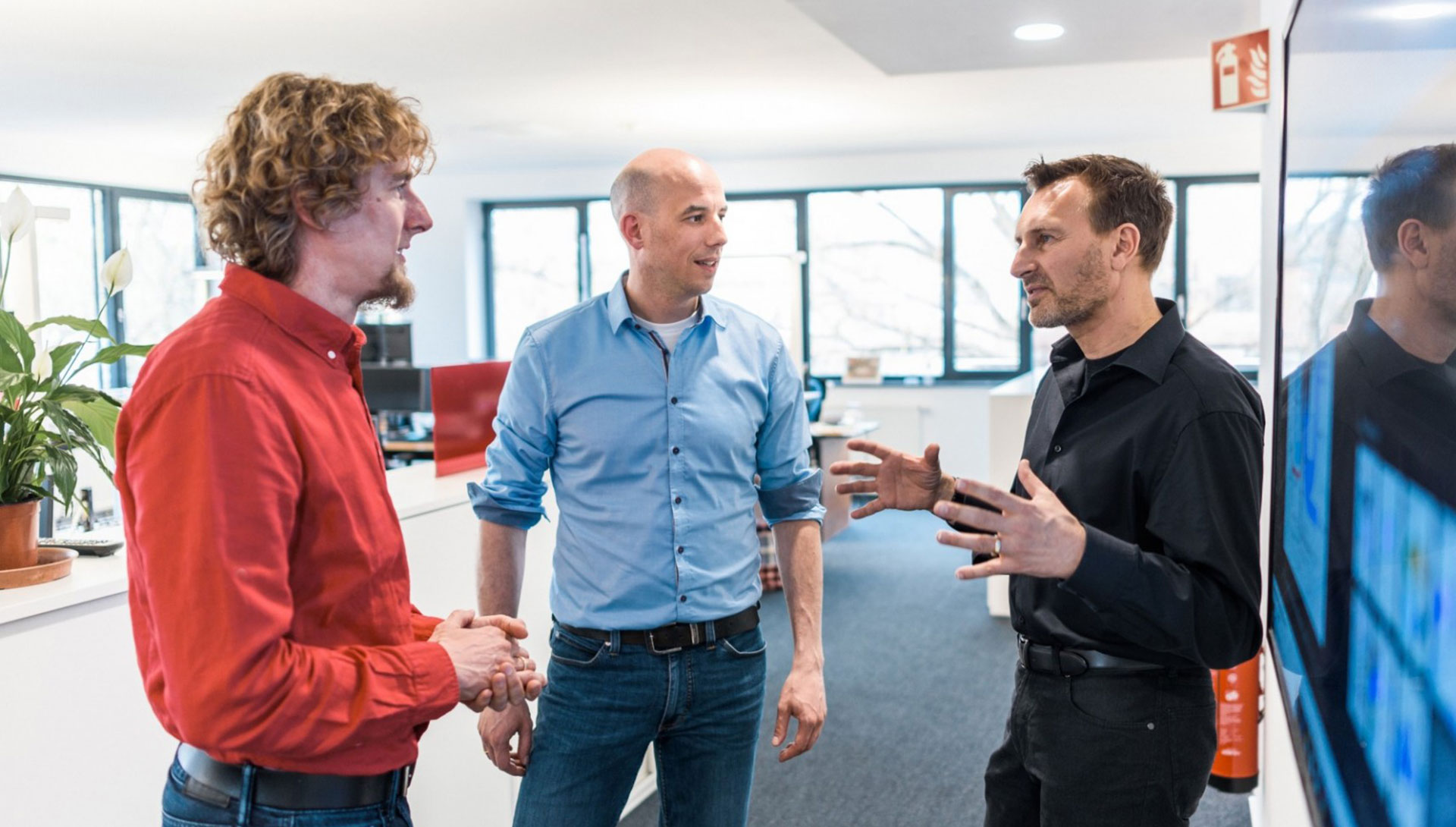


Further Development: Creating Sustainable Value
After go-live, we continue to support you – either closely or on demand. Together, we ensure that Clarity evolves with your requirements and generates sustainable long-term value.
- Reliable partner even after go-live
- Sustainable system development
- Fast support in daily operations
- Access to best practices from numerous projectsProjectA project is a temporary initiative with clearly defined objectives, resources, and a specific outcome.
Best Practices for Software Implementation
The essential success factors for the introduction of a completely new tool are having a clear goal, good communication with a training at the end, sound project planning, specialist expertise, stringency, and having fun carrying out the project.
Best Practices for Software Implementation
We need the acceptance of all users, and to this end we show them where and how added value is created – including beyond the boundaries of your business unit. It is important to sensitize users to these topics and to look at the topic holistically.
Best Practices for Software Implementation
Taking an iterative approach to implementing Clarity can significantly boost acceptance of the tool among future users. At TeamBank, we found that it’s very helpful to gradually introduce individual functions that are aimed at replacing our existing processes. This allows employees to get used to new ways of working and makes them more likely to embrace them. Over time, the range of functions can then be continuously expanded.

Best Practices for Software Implementation
I would recommend that any company that wants to establish new processes (or tools) implement a six-month live phase for testing the processes. This allowed us to determine which optimizations and further requirements we still needed to implement for the introduction of digital approval.
Critical Success Factors During the Implementation Phase
Our Services for a Successful Start
From process consulting and hosting to operations and training: Learn more about how itdesign supports you during the implementation phase. Benefit from 20+ years of experience with Clarity implementations.

