

“We’re constantly working at our limit, yet the truly important strategic initiatives still aren’t moving forward.” Does this thought sound familiar?
Many people know this situation all too well: The days are packed, the to-do lists are long, and meetings follow one after another. Teams work late into the evening, and everyone is tackling “urgent” topics in parallel. Yet at the end of the day, there is still the feeling that the most important initiatives are being neglected.
What seems necessary in the short term pushes aside what is relevant in the long term. This not only causes frustration but also prevents strategic progress. This is exactly where many organizations turn to project portfolio management.
But what exactly does that involve? What challenges do companies encounter time and again? And how can portfolio managementPortfolio ManagementPortfolio management is the strategic management of a set of projects, programs, or investments within a company. be designed to actually create focus and reduce strain?
What Do We Mean by Project Portfolio Management?
Project portfolio managementProject Portfolio ManagementProject portfolio management refers to the centralized management of all projects within a company. (PPM) is a valuable method for making business activities such as projectsProjectA project is a temporary initiative with clearly defined objectives, resources, and a specific outcome., initiatives, or ideas transparent, prioritizing them, and focusing limited resources on the most important activities.
In practice, PPM consists of four closely connected activities that continuously repeat in a cycle. We combine these activities in our Lean PPMLean PPMSynonym for → Lean Portfolio ManagementPortfolio management approach based on lean principles model:
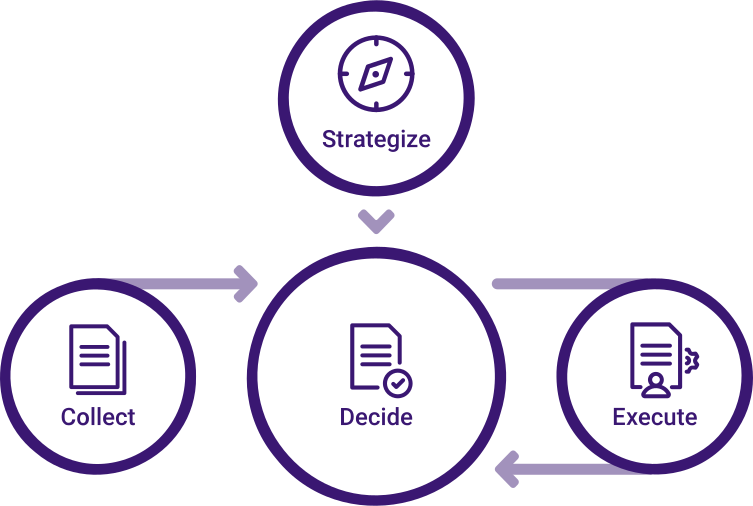
1. Strategize – Translate Strategy into Action
The process begins with the question: What is truly important to our organization? To answer this, the corporate strategyCorporate StrategySynonym for → Strategic PlanningLong-term direction of a company. is translated into concrete evaluation criteria that can later be used to assess projectsProjectA project is a temporary initiative with clearly defined objectives, resources, and a specific outcome..
These criteria vary from one organization to another. For some, costs and budget compliance are the primary focus; for others, revenue potential, risk reduction, sustainability, or social impact may be more important. What matters most is that the criteria are clearly defined and understandable for everyone.
2. Collect – Gather Ideas and Projects
In the next step, all projectProjectA project is a temporary initiative with clearly defined objectives, resources, and a specific outcome. ideas and initiatives across the organization are collected and evaluated. The goal is complete transparency regarding what could potentially be done – regardless of whether an initiative will ultimately be implemented.
Only when all proposals are visible can they be meaningfully compared and prioritized.
3. Decide – Make Decisions
Based on the evaluation criteria, the projectProjectA project is a temporary initiative with clearly defined objectives, resources, and a specific outcome. portfolio is assembled. This stage is about setting clear priorities and making honest decisions:
- Which projects contribute most strongly to our strategy?
- What can we realistically achieve with the resources available?
- Where do we need to consciously say no?
Project portfolio managementProject Portfolio ManagementProject portfolio management refers to the centralized management of all projects within a company. always means not doing everything at the same time.
4. Execute – Manage Execution
Portfolio managementPortfolio ManagementPortfolio management is the strategic management of a set of projects, programs, or investments within a company. remains important even after decisions have been made. During execution, conflicts involving goals and resources regularly arise – for example, when several projectsProjectA project is a temporary initiative with clearly defined objectives, resources, and a specific outcome. require the same key personnel.
Project portfolio managementProject Portfolio ManagementProject portfolio management refers to the centralized management of all projects within a company. ensures that adjustments can be made in these situations and that it is clear which project takes priority.
Common Challenges in Project Portfolio Management
In practice, we repeatedly observe similar stumbling blocks when organizations introduce or further develop project portfolio managementProject Portfolio ManagementProject portfolio management refers to the centralized management of all projects within a company..
How Companies Overcome These Challenges
Successful project portfolio managementProject Portfolio ManagementProject portfolio management refers to the centralized management of all projects within a company. does not result from isolated measures. It comes from the combination of clear processes and appropriate tool support.
Our experience shows that organizations need a lean but stable portfolio management process in which all four elements work together effectively. They also need software that supports this process as effectively as possible.
When this combination succeeds, effective projectProjectA project is a temporary initiative with clearly defined objectives, resources, and a specific outcome. portfolio managementPortfolio ManagementPortfolio management is the strategic management of a set of projects, programs, or investments within a company. delivers exactly what many organizations are currently missing: focus, clarity, and relief from overload – both at the portfolio level and in the day-to-day work of teams.
Practical Solutions
1. Create Transparency Through a Single Source of Truth
Establish a central location where all information is collected – from new project ideas and active projects to the corporate strategy itself. This prevents information from being spread across multiple tools, lists, and notes, and provides a consolidated view of the entire portfolio without time-consuming manual consolidation.
2. Establish Clear Decision-Making Roles and Processes
Clearly define who is responsible for making decisions at each stage of the project portfolio process. A tool such as Clarity can help stakeholders make decisions consistently and communicate them effectively by automating key process steps.
3. Base Decisions on Reliable Data
Define clear evaluation criteria that serve as the basis for prioritizing projects. This creates an objective foundation for decision-making, increases team acceptance, and provides greater transparency throughout the prioritization process.
4. Continuously Prioritize Projects and Deliberately End Them When Necessary
Review and prioritize your project portfolio regularly, and have the courage to stop projects deliberately when appropriate. This prevents too many parallel initiatives, reduces overload, and creates room for the most important topics to move forward. As a central source of truth, Clarity consolidates all relevant information needed for sound prioritization decisions.
Read Next